

A practical guide for yoga studios and teachers to welcome new students, understand their goals, and prepare for a more comfortable first class.
A new student walks into your studio five minutes before class. You know their name, but little else: whether they have practiced yoga before, what they hope to get from the class, or whether they would prefer you to avoid hands-on adjustments.
A short yoga intake form helps you gather those details before they arrive. It gives students a chance to tell you what matters to them, and it gives your team a consistent way to prepare. The goal is not to collect a complete medical history. It is to ask a few useful questions, explain why you need the answers, and make it easy for students to update them.
Below, we cover what to include, what to leave out, and an example you can adapt for your studio.
What is a yoga intake form?
A yoga intake form is a questionnaire that a new student completes before their first class or private session. It typically collects contact details, yoga experience, goals, relevant considerations for participation, and preferences about instruction.
Studios may use one form for all new students or create different versions for group classes, private sessions, retreats, and specialised classes. A private yoga teacher might ask more about goals and scheduling; a group studio may keep the form short enough to complete in a few minutes.
An intake form gathers information. A liability waiver explains risks and records agreement to specific terms. A consent question asks permission for something specific, such as hands-on assistance or use of a student's photo. You can present these together in one signing flow, but label each section clearly and avoid treating one signature as blanket permission for everything.
Why ask new yoga students to complete an intake form?
An intake form can help your studio:
- Welcome students by name and understand what brought them in.
- Suggest an appropriate class or offer relevant options.
- Learn about preferences that affect their experience, such as verbal cues versus hands-on assistance.
- Identify information a student wants to discuss privately before class.
- Keep a consistent record when several teachers share the same schedule.
- Reduce paperwork and rushed conversations at reception.
The form is a starting point for a conversation, not an assessment of whether someone is medically fit to practice. Yoga teachers should teach within their qualifications and avoid diagnosing conditions or prescribing treatment. Yoga Alliance's scope of practice describes these boundaries for its members.
What should a yoga intake form include?
1. Basic student and contact details
Start with the information you genuinely need to identify and contact the student:
- Full name
- Email address
- Phone number, if your studio uses it for class updates
- Emergency contact name and phone number, if relevant to your activities
Tell students what the emergency contact is for. Avoid requesting dates of birth, addresses, or other details by default unless you have a clear reason to collect them.
2. Yoga experience and class goals
These questions help teachers adapt their explanations and recommend a suitable class:
- Have you practiced yoga before? If so, what kinds of classes have you tried?
- What would you like to get from your classes?
- Are there particular movements or parts of class you would like help with?
Give students room for a brief answer. Some will want to build strength or flexibility; others simply want a welcoming place to move. Avoid promising a health outcome based on what they write.
3. Relevant participation considerations
Ask only for details a teacher needs to know to offer options or discuss participation. A simple prompt works better than a long checklist of diagnoses:
> Is there an injury, limitation, pregnancy-related consideration, or other factor you would like your teacher to know about before class? Please share only what you feel is relevant to your participation.
Add an option such as “I'd prefer to discuss this privately”. Let students know they can speak with the teacher before class and that they can choose whether to participate in any movement. For specialised classes, such as prenatal or hot yoga, use a separate intake flow tailored to that class and the teacher's qualifications.
Information about someone's health can be sensitive personal data. Collect the minimum needed, explain how it will be used, restrict access, and follow the privacy rules that apply where you operate. The UK's Information Commissioner's Office guidance highlights the importance of minimising sensitive data.
4. Preferences about hands-on adjustments
If teachers offer physical adjustments, make this a distinct question. For example:
> How would you like to receive guidance during class? > > - Verbal guidance only > - You may ask me about a hands-on adjustment during class > - I'd like to discuss this with the teacher first
A response on an intake form can communicate a preference, but it should not be treated as permanent permission to touch a student. Ask for specific, informed permission at the time and respect a change of mind. Yoga Alliance's code of conduct requires explicit and informed consent before hands-on assistance for its members; its scope of practice says previous consent does not imply future permission.
5. Acknowledgements and signatures, when needed
If your studio uses a liability waiver, present its terms separately from the intake questions. The student should be able to read the terms before signing, and the document should fit your activities and local law. See our yoga liability waiver guide for the elements to consider.
Keep optional permissions separate too. For example, a request to use a student's photo in marketing should have its own clear choice rather than being tucked into a required health questionnaire.
Yoga intake form example
Use this as a starting point. Remove questions you do not need and adapt the wording to your classes and privacy practices.
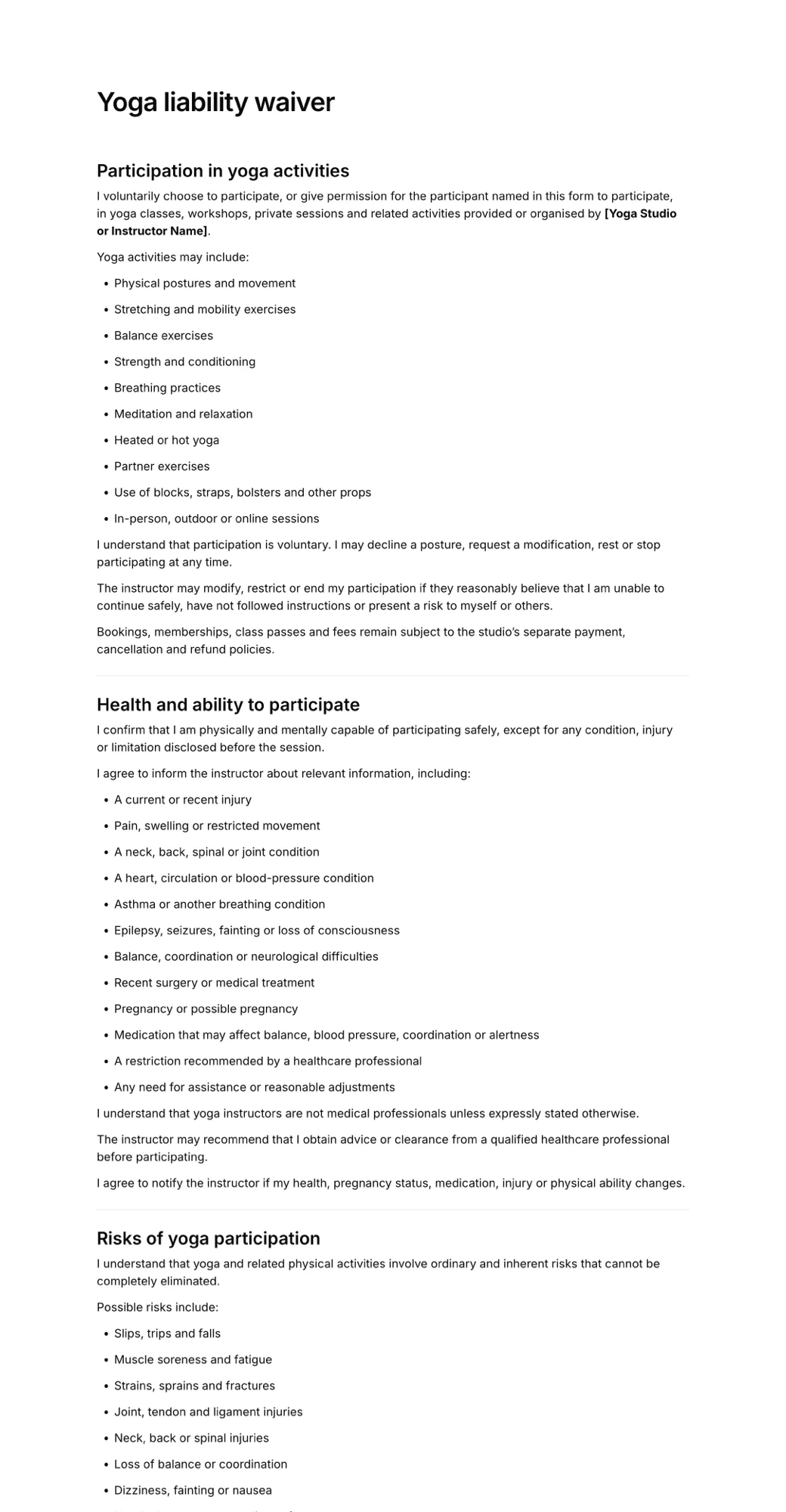
This example is an intake questionnaire, not a ready-made liability waiver or medical screening tool. If you need either, add a distinct section drafted for your studio and reviewed where appropriate.
How to create a better first-day experience
Keep the form short. Begin with questions you will actually use. If nobody reads a field before class, consider removing it.
Send it before the first visit. A link in the welcome or booking email gives students time to answer without a queue behind them. You can also display a QR code at reception for walk-ins.
Explain who can see the answers. Health-related notes should be available only to people who need them for the stated purpose. Tell students how to correct or update their information.
Review the form before class. An intake form only helps when the teacher can act on relevant preferences. Arrange a private conversation when a student requests one.
Revisit it when circumstances change. A student may develop an injury, become pregnant, or change their preference about touch. Make it easy to update details without asking everyone to repeat the entire form before every class.
Create a digital yoga intake form with AgreeDock
With AgreeDock, you can build a form with contact fields, questions, checkboxes, and a signature field where appropriate. Share it by link or QR code, collect responses before students arrive, and find completed records later.
If you also need a release, start with the yoga liability waiver template and adapt it to your studio. Keep the intake questions, waiver terms, and optional permissions clear so students understand what they are providing and agreeing to.
Frequently asked questions
Do yoga studios need an intake form?
An intake form is a practical way to learn about new students and prepare for class. Whether a particular form is required depends on your location, activities, insurer, and business policies. Keep the questions proportionate to what your studio needs.
What health questions should a yoga teacher ask?
Ask whether there is anything relevant to participation that the student wants the teacher to know, and offer a private way to discuss it. Avoid collecting a detailed medical history simply because a template includes one. Teachers should stay within their scope of practice.
Is a yoga intake form the same as a liability waiver?
No. An intake form gathers student information and preferences. A liability waiver sets out risks and agreement terms. A studio may present both during onboarding, but each should be clearly identified.
Should I ask students for consent to hands-on adjustments on the form?
You can ask for their general preference on the form. A teacher should still seek explicit, informed permission before a particular hands-on adjustment and respect any change in preference.
How often should students update their intake form?
Invite students to update it when relevant circumstances or preferences change. You can also periodically ask returning students to confirm whether their details are still current. The right schedule depends on the type of class and information collected.
Can students complete a yoga intake form online?
Yes. An online form can be shared before the first visit by link or at the studio by QR code. Check that it works on a phone and that students can review any terms before signing.